Showing posts with label consumer protection. Show all posts

Monday, October 20, 2025

Schuyler County Attorney Warns of Scams Targeting Inflation Refund Checks

Schuyler County Attorney Steven Getman is urging residents to beware of scammers sending fake text messages and making fraudulent calls in a bid to steal personal information as New York state begins distributing billions of dollars in tax refunds and rebates this fall.

Getman said the scams are exploiting anticipation over Gov. Kathy Hochul's inflation relief checks, which are being mailed to more than 8 million eligible households in amounts up to $400. The one-time payments, part of the 2025-26 state budget, aim to offset New York’s excess tax revenues.

"These criminals are preying on hardworking families eager for well-deserved relief, posing as state officials to trick people into sharing sensitive details like Social Security numbers or bank information," Getman said. "No legitimate government agency will ever ask for that over the phone or via unsolicited text."

The New York State Department of Taxation and Finance began mailing the checks at the end of September, with deliveries continuing through October and November. Eligible recipients — those with 2023 adjusted gross incomes under $150,000 for individuals or $300,000 for joint filers who filed state tax returns — do not need to apply or provide additional information, Getman said.

Scammers' messages often reference "Gov. Hochul's inflation relief checks" or claim urgent action is required to "claim your refund" or "verify payment details," according to alerts. Similar frauds have targeted other rebates, including the STAR property tax relief program, amid a surge in phishing attempts statewide.

Getman advised anyone receiving suspicious contacts to hang up or delete the messages immediately, without engaging or clicking links.

"Report these scams right away to local law enforcement the state Tax Department at 518-457-5181 or the Federal Trade Commission at ftc.gov/complaint," Getman said.

"By staying vigilant, we can protect our community and ensure this relief reaches those who need it most."

Monday, August 18, 2025

Schuyler County Attorney Warns Residents of Rising Text and Phone Scams

Schuyler County Attorney Steven J. Getman is alerting residents to a surge in fraudulent text messages, phone calls, and websites targeting New Yorkers.

“Scammers are impersonating government agencies, such as the Department of Motor Vehicles (DMV) and E-Z Pass, or posing as law enforcement to demand payment for fake traffic tickets, E-ZPass fees, or alleged jury service delinquencies,” Getman said.

“These scams aim to steal money and personal information for identity theft and account takeovers.”

According to Getman, scammers use fake texts, calls, and websites designed to appear official, pressuring victims to pay quickly to avoid penalties like driver's license suspension or arrest. These fraudulent communications often include poor spelling, bad grammar, or threatening language. The DMV and E-ZPass do not send texts demanding payment for outstanding balances.

State officials, including the DMV, Thruway Authority, and Department of State, issued warnings on Thursday (August 14) about these deceptive tactics. A recent case in nearby Steuben County involved a resident receiving a call from someone claiming to be a police officer, demanding payment via text voucher to avoid arrest for alleged jury service delinquency.

Schuyler County residents can protect themselves by following these recommendations from state officials:

• Be Cautious: Do not click links in texts or emails claiming to be from trusted sources if you have any doubts.
• Verify Websites: Legitimate communications only direct to official DMV (dmv.ny.gov) or E-ZPass (e-zpassny.com) websites. Check URLs carefully.
• Spot Red Flags: Look for poor spelling, grammar, or urgent threats in messages.
• Protect Personal Information: Legitimate agencies do not request sensitive information via email or text.

The Department of State's Division of Consumer Protection also advises:

• Use unique, complex passwords for each account.
• Enable extra security like fingerprint or facial recognition.
• Avoid saving passwords on devices or clicking free download links from pop-up ads. dos.ny.gov/consumer-protection
If you suspect your account has been compromised:

• Update passwords for all affected accounts and contact your email provider if necessary.
• Report unauthorized charges to your bank or credit card provider.
• Warn friends and family about suspicious messages from your compromised accounts.
• Contact Experian, Equifax, or TransUnion to place a fraud alert or security freeze on your credit report.
• File reports with the Federal Trade Commission at ftc.gov and identity theft cases at identitytheft.gov.

Getman urges residents to stay vigilant, verify communications, and report suspicious activity promptly to protect themselves and their community.

Schuyler County urges those who believe they are victims of a scam to contact the Schuyler County Sheriff’s Office at 607-535-8222 or in an emergency dial 911. Outside of Schuyler County, complaints can be filed with any local law enforcement agency or to the New York State Consumer Frauds Bureau by calling 1-800-771-7755.

Monday, February 24, 2025

Tips for New Yorkers to Protect Themselves from Predatory Debt Collectors

New York State officials have released a guide to help New Yorkers use the state’s Exempt Income Protection Act (EIPA) to protect their money from debt collectors:

The EIPA is a state law that prevents debt collectors from draining consumers’ bank accounts, leaving them unable to cover the costs of basic needs. The law automatically protects a certain amount of money in people’s bank accounts
from being frozen or seized, and also protects vital government benefits like Social Security, disability benefits, and veteran’s benefits.

****

The EIPA automatically exempts a certain amount of money in people’s bank accounts from being frozen or seized. This protected amount is based on the minimum wage and is $3,960 for those in New York City, Long Island, or Westchester, and $3,720 for those anywhere else in New York as of January 2025. The EIPA also protects 90% of wages or salary earned in the 60 days before a debt collector attempts to seize funds.

Crucially, EIPA also protects government benefits and retirement funds from being frozen or seized, ensuring New Yorkers have enough money to pay their bills. These funds include:

• Social Security;
• Supplemental security income;
• Disability benefits;
• Unemployment insurance;
• Workers compensation;
• Veterans benefits;
• Spousal support, alimony, or child support; and
• Payments from public or private pensions and retirement accounts, such as 401(k)s or individual retirement accounts (IRAs).

For a copy of the guide, click here.

Monday, September 9, 2024

New Yorkers warned: Beware of Investment Scams Using AI-Manipulated Videos

New York State officials have issued an investor alert warning New Yorkers about scams that are luring potential investors with fake videos created with artificial intelligence (AI) to show celebrities and business leaders touting fraudulent investment schemes.

Deepfake investment scams target victims online with AI-manipulated videos that show wealthy individuals like Elon Musk, Jeff Bezos, and Warren Buffet apparently touting the scammers’ investment schemes, which often involve cryptocurrency. Scammers use AI tools to manipulate existing videos to change the voice and mouth movements of the individuals to create seemingly genuine endorsements for their frauds. These videos are then served to social media users as advertisements or broadcast as fake livestreams on platforms like YouTube. Scammers may also pose as government officials or other people in order to gain victims’ trust. The
accessibility of AI tools allows scammers to produce ads for their frauds at scale with a variety of impersonations to target a wide range of potential victims. It can be difficult to tell from the video alone if it is a deepfake.

Once their victims show interest in the supposed investment, scammers may try to move the conversation off of public social media into encrypted private messaging services such as Whatsapp or Signal. After the victims have made an initial investment on the fraudulent platforms described in the ads, scammers will often create fake websites showing the investment increasing in value and encourage victims to send more money. After making more investments, sometimes totaling hundreds of thousands of dollars, victims will be unable to withdraw their funds or will be asked to pay more in withdrawal fees or “taxes.” Eventually, the scammers will cut off contact, having pocketed the victim’s money from the first investment. Even worse, victims may be later contacted by services that suggest they can retrieve their funds, only to end up draining more of the victims’ net worth.

According to officials, these AI-manipulated videos, known as deepfakes, often appear in social media feeds, digital ads, and messaging apps and are expected to fuel billions of dollars in fraud every year.

Anyone who may have been a victim of this type of scam is urged report it to local law enforcement or to the New York State Attorney General by filing a complaint online or calling 1-800-771-7755.

Monday, January 23, 2023

New York enacts ‘right to repair’ bill for electronic devices

New York Daily News:
Finding ways to fix smartphones and other electronic devices will soon be a little easier for New Yorkers (under) a bill that will eventually require manufacturers to make diagnostic manuals, tools and other parts necessary for repairs available to the public and independent service shops.

The measure, considered the first so-called “right to repair” law in the country, will only apply to products made or sold after July 1, 2023.

The new law will cover digital electronic products, such as phones, tablets and IT equipment, and require companies provide access to the parts, tools and information needed to repair equipment.

Environmental advocates celebrated the legislative victory and said the new law will help reduce the threat from toxic chemicals found in many of the devices when they are prematurely discarded.

However, at least one “right to repair” advocate has declared that changes made to the bill by Gov. Kathy Hochul have rendered the law “functionally toothless”:
Right to Repair advocate Louis Rossmann has made a bitter YouTube video expressly saying that Governor Hochul's statement is "the exact opposite of what's going to happen with this bill because of how it was amended."

Central to Rossmann's argument is that the purpose of Right to Repair is to allow consumers to fix or replace individual components that have broken. As passed, he argues that the bill effectively allows companies free reign to declare a single component as unrepairable, and instead offer a costly assembly of several related parts.

"[The] manufacturer will tell you that when you have a bad $28 chip on your motherboard that what you need to do is replace the $745 Motherboard," he says.

For a complete copy of the new law, click here.

Monday, February 14, 2022

Valentine's Day 2022: Avoid these "romance scams."

Romance scams in 2021: Fraudsters to the left of you, fakers to the right
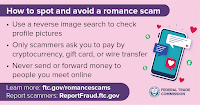
Love happens year-round, not only on Valentine’s Day. Unfortunately, romance scams are the same. So, along with sharing (or not) some chocolate, make Valentine’s Day a time to share with people you care about some ways to spot and avoid romance scams. Because, according to a new FTC report, people sent $547 million to online romance scammers last year.
How can you avoid a romance scam?
If someone appears on your social media and rushes you to start a friendship or romance, slow down.
Don’t send a reload, prepaid, or gift card; don’t wire money; and don’t send cryptocurrency to someone you met online.
If you suspect a romance scam, cut off contact. Tell the online app or social media platform right away, and then tell the FTC at ReportFraud.ftc.gov.

Friday, November 26, 2021

Schuyler County Officials Warn: Be aware of unsolicited property offers. “Know your rights before you sign.”

Schuyler County Clerk Theresa Philbin and County Attorney Steven Getman are warning property owners to be aware of unsolicited offers to buy land in Schuyler County, often at a deep discount from the actual value.

“Reports have surfaced this month of a company soliciting property owners in the area offering to buy vacant land for cash,” Philbin said. “The offers include a Purchase and Sale Agreement, asking the owner to sign and send back within a short period of time. The quick cash offer they make is always below the assessed value, and sometimes by as much as 15 to 25 percent. That could cost you thousands of dollars, depending the price and your property’s actual value.”

“Many of these buyers are, basically, throwing out nets to see if they can find an owner who doesn't understand the real value of their property or an owner that wants to sell quickly at (almost) any cost. They may be senior citizens, facing a personal situation that is forcing them to consider selling their real estate. These buyers are often hoping to find sellers willing to sell at 85% or less of the true market value.”

While the offer may be perfectly legal, signing and sending back the agreement, Getman pointed out, would create a binding contract. That contract, Getman said, may obligate the owners to conditions or expenses they did not understand before signing.

“For example, the offer may state the buyer will pay all closing costs, but also require the seller to clear up any liens or encumbrances on the property at the seller’s own expense before the sale,” Getman explained. “That could include mortgages, property taxes or even electric, water and sewer bills. If the sale price does not cover those expenses, the sellers could be left paying out more than they are getting for the property.”

Therefore, property owners should review any documents very carefully and consult an experienced attorney before signing any type of agreement, Getman said.

Philbin and Getman offered several tips to property owners who receive unsolicited offers to buy their land:

• Never sign anything until you are sure you want to move forward.
• Have your own attorney review the document before your sign them. If you do not have an attorney, the New York State Bar Association may be able to refer you to an appropriate attorney via the NYSBA Lawyer Referral and Information Service: https://www.findalawyernys.org.
• Check out the would-be buyer online. If someone is legitimately interested in buying your home, you should be able to retrieve information about them. Look for any red flags such as bad reviews or lawsuits.
• Ask for references. If the buyer will not offer any, something is wrong. If their references are sketchy and cannot be verified, you need to rethink doing business with that person.
• Find out the fair market value of your home before you agree to a price.
• Consider bringing in a real estate professional to represent you and give you a fair opinion of your land’s value. If the buyer is legitimate they should be willing to discuss terms with your agent.
• If selling your property seems like a good idea, do not jump at the first offer made (especially if it represents just a small fraction of the land’s worth).

Finally, if you receive anything in the mail about your property that seems questionable, Philbin and Getman said that you can contact the County Clerk or, in the event of possible criminal activity, local law enforcement.

“Keep in mind that this is often totally legitimate,” Getman said. “The goal here is to understand what you may sacrifice for convenience.”

“Know your rights before you sign,” Philbin said.

The Schuyler County Clerk is responsible for all books, files and other necessary equipment for the filing, recording and depositing of deeds, maps, papers in actions and special proceedings of both civil and criminal nature, judgment and lien dockets and books for the indexing of the same as directed or authorized by law.

The Schuyler County Attorney is the legal advisor for county government and its various officials. The County Attorney prosecutes and defends civil actions on behalf of the county and county employees acting pursuant to their official duties.

Monday, July 26, 2021

New law protects New Yorkers from “spam” text messages.

New York state officials have enacted new legislation, expanding New York State’s definition of telemarketing to include text messages.

New Yorkers have protection against unwanted robocalls under state law, but texting was not previously defined as telemarketing, exempting it from those protections. This legislation closes that loophole.

State law originally protected New Yorkers against unwanted robocalls, but text messages were not included under those protections. That stipulation has changed. Now, the definition of “telemarketing” as it pertains to state law also encompasses text messages.

Many New Yorkers saw a rise in unwanted calls and text messages from telemarketers during the pandemic.

A complete copy of the new law can be found here.

Monday, July 19, 2021

Leasing your land for solar power? Know your rights before you sign.

Solar power can offer New Yorkers many potential benefits, including saving money through reduced electricity bills, creating stability during periods of electric rate changes and contributing to a cleaner and healthier community by reducing our carbon footprint. With more and more state residents considering solar power, a number of private companies are looking to develop and initiate construction of new solar projects across the state, including in Schuyler County.

Recently, a number of Schuyler County landowners have reported receiving proposals from one or more energy firms, seeking land for solar facility development. These proposals offer landowners money for an option to lease or purchase land to develop, build and operate a solar power generation and storage facility on the premises. Payments may include an option signing bonus, annual option payments and potential annual lease payments. In some cases, payments may net landowners thousands of dollars.

While the terms of these options may seem very attractive, these agreements are legal documents with potential long-term implications, potentially both positive and negative. Therefore, you should proceed carefully before signing them.

For more information, click here.

Monday, April 5, 2021

The top consumer scams perpetrated against New Yorkers in 2020

New York State officials have released a list of the top consumer scams perpetrated against New Yorkers in 2020, many of which had to do with the COVID-19 public health crisis, in addition to a variety of tips on how New Yorkers can avoid COVID-19 scams in the future.

After analyzing consumer complaints received statewide throughout 2020, the following were found to be the top 10 consumer complaints by category:

• Internet-Related (internet services and service providers, data privacy and security, digital media, data breaches, frauds through internet manipulation)
• COVID-19 Price Gouging (online and brick and mortar gouging of prices for items such as hand sanitizer, masks, gloves, bathroom tissue, food)
• Landlord/Tenant Disputes (security deposit releases, tenant-harassment)
• Health Clubs (continuous charging of fees while clubs were closed, inability to cancel memberships, refunds not provided, no response from clubs)
• Automobile (sales, service, financing, repairs)
• Consumer Services (security systems, tech repairs, immigration services, employment training)
• Retail Sales (any sale of goods: food, clothing, rent-to-own, online orders)
• Credit (debt collection, credit card billing, debt settlement and debt relief, payday loans, credit repair, credit reporting agencies, identity theft)
• Utilities (wireless and residential phones, energy servicers and suppliers, cable and satellite)
• Travel (inability to cancel or lack of refunds for cancellations required by COVID-19 travel restrictions)
Consumers can learn more about COVID-19 resources and consumer scams here.

Fraud victims should report instances of fraud to the New York State Consumer Frauds and Protection Bureau or by calling local law enforcement officials.

Monday, March 4, 2019

Schuyler County officials warn seniors of “grandparents scam,” other frauds

Schuyler County Office for the Aging Director Tamre Waite and Schuyler County Attorney Steven Getman are warning area seniors that the “grandparents scam” and other frauds may be making the rounds of the area.

At least several local residents have reported being a victim of the grandparents scam, in which the scammer calls or emails the victim posing as a relative, usually a grandchild, in distress or someone claiming to represent the grandchild (such as a lawyer or police officer), they said.  

“The scammer tells the victim he or she is in trouble and needs the victim to wire them funds or send a prepaid debit card that will allegedly be used for bail money, lawyer’s fees, hospital bills or another expense,” Getman said.  “The caller adds enough details to make the story seem believable.  Sometimes, the caller begs the victim ‘please don’t tell my parents.’”

The scam resurfaces every few years in various communities throughout the country, he noted.  Scammers often mine emails, Facebook and other social media for the necessary information to pose as the grandchild, Getman explained.

Often, the scammer works with a partner, Waite said, who gets on the phone and pretends to be an authority figure, with instructions on where to send payment.

“Grandparents will do anything for grandchildren, so they’re a vulnerable target,” Waite said.  “These scammers are very good at playing on our emotions.”

Waite and Getman said the scam can avoided with a few simple steps:
·      Beware of any urgent solicitation of funds, especially if it is needed to pay for unexpected bills, such as bail money, lawyer’s fees, or doctor bills, especially if it comes late at night;
·      Beware of requests to send debit cards or wire money, as these are scam artists’ payment method of choice;
·      Verify the person’s identity by asking questions someone else couldn’t possibly answer, such as the name and species of the grandchild’s first pet;
·      Before sending funds, independently contact the grandchild or another relative at their regular phone number to verify the details of the story;
·      Check the privacy settings on your social media accounts and safeguard your email by using antivirus and anti-spyware software;

Seniors who have been victims of this scam, or who suspect a call is a scam should immediately report it to local law enforcement.

Other scams that may be targeting the area, Waite and Getman said, involve fraudulent Social Security  and Medicare calls.

“We are also receiving reports from individuals who have been the target of Social Security and Medicare scams,” Waite said.  

“Apparently callers are targeting Medicare recipients telling them that their Medicare card has been suspended and must be reactivated and in order to do so, they must pay a fee,” she explained.  

“They then tell the person they must provide their social security number and payment information. As another fear factor, they are telling people that their assets will be frozen until this is cleared up. People are complying out of fear they will lose their coverage.”

Getman warned seniors to be suspicious of any calls that seek personal information over the telephone.

“If you are a beneficiary of Social Security or Medicare, be aware these agencies do not call you to ask you to disclose financial information to get a new card,” he explained.  “Never give out your Medicare number or any other personal information to someone you don’t know.”

“When in doubt, hang up,” Getman said.  “Legitimate government agencies will usually follow up with a written request.”

Waite and Getman said Medicare consumers who provided information to these callers should review Medicare statements closely and call 1-800-MEDICARE or 877-272-8720 immediately if they see anything unusual or suspicious. They may also contact their local law enforcement agencies.

The Schuyler County Office for the Aging was established as a result of the Older Americans Act of 1965 with the core function being provision of information, referrals and services for county residents age 60 and over, as well as their caregivers.

The Schuyler County Attorney is the legal advisor for county government, including the Office for the Aging, Department of Social Services Adult Protective Unit and other county agencies serving the senior population.


For more information on avoiding tricks and scams, click here.

Monday, November 26, 2018

How to protect yourself from Cyber Monday scammers

A new report says Cyber Monday provides the perfect environment for cyber criminals: “They offer up distracted shoppers and ample opportunity. An estimated 164 million people are planning to shop between Thanksgiving Day and Cyber Monday, and online sales alone are expected to reach up to $143 billion.” Here are some tips from to protect yourself online:
• Shop only on secure Internet connections. 
• Do not be tricked by confusingly similar website and domain names.  
• Protect yourself by using credit or debit cards.  
• Beware of misleading bargains and added fees.  
• Compare warranty terms.  
• Know the terms of a layaway plan.  
• Check return and refund policies.  
• Beware of restricted gift cards.  
• Be wary of too-good-to-be-true contests and prize promotions.  
• Read the fine print. 
For more information on how to protect yourself from Cyber Monday scams, click here.

Monday, August 27, 2018

Tips for Schuyler and Seneca County residents impacted by flood damage to avoid scams when hiring contractors


In response to last week’s flooding in Schuyler and Seneca Counties, which left many property owners with extensive damage, New York State officials have released a list of tips for consumers to avoid being scammed, when hiring a contractor:
          Be specific about what work you want done.
          Educate yourself about the required permits – don't rely solely on the contractor.
          Shop around.
          Get references and check them.
          Get proof of insurance from the contractor.
          Check licenses (if required).
          Never pay the full price upfront.
          Always put work to be done in writing, including all add-ons.
          Know where your payments are going.
          Never do business with a contractor who is unwilling to abide by any of the conditions above.

New York State law requires every home improvement contractor, before beginning work to provide the consumer with a written contract to be signed by both parties that sets out certain specific information and disclosures, including:
          Proposed start and completion dates;
          Particular description of the work to be done;
          Materials to be provided; and
          Notice that the consumer has an unconditional three-day right to cancel the contract without penalty.

In addition, the law requires that any advance deposits taken by the contractor must be placed into an account at a banking institution separate from the contractor’s other funds. The contractor must notify the consumer of the banking institution at which the deposit is kept.
If you feel you have been victimized, please feel free to contact the New York State Attorney General's Office at 1-800-771-7755 or local law enforcement agencies in your area.

Monday, June 25, 2018

Phishing scams targets Airbnb customers

Criminal hackers are taking advantage of the popularity of Airbnb with phishing campaigns targeting that site’s customers.

One recent scam involves the General Data Protection Regulation (GDPR). GDPR is a regulation that requires businesses to protect the personal data and

privacy of European Union citizens for transactions that occur within EU member states. Websites across the world are being affected. The regulation took effect in May and many organizations are updating their privacy policies and emailing customers to ensure they are aware of the changes. The phishing scam seeks to exploit this. A phishing email, which claims to be from Airbnb customer support, advises users that they must accept a new privacy policy based on the GDPR before they can make any further bookings. Anyone who clicks the link is asked to enter their personal information, including account credentials and payment card information.

Another scam involves fake Airbnb property listings. Scammers post these listings to lure in interested renters. Once someone reaches the stage of being ready to book, the scammers will send a link to the Airbnb listing asking them to complete the booking through a real-looking, but fake, site. Once on that site, the prospective customer’s identity and payment information is stolen. Similar scams involve the fakers asking for advance payment, for properties that do not exist.

Airbnb has tips to avoid these, and other, scams involving their site here.

Monday, March 19, 2018

The top ten frauds of 2017 released: Watch out for these common scams

New York State officials have released the list of the top ten consumer fraud complaints received by the Attorney General's office in 2017.

They are:

CATEGORY AND NUMBER OF COMPLAINTS

1. Internet (internet services & service providers; data privacy & security; child safety; consumer frauds) 5,153 complaints
2. Automobile (buying; leasing; repair; service contracts; rentals) 3,188 complaints
3. Consumer-Related Services (security systems; restaurant/catering services; tech repairs) 2,463 complaints

4. Landlord/Tenant Disputes (security deposit releases; tenant harassment) 1,961 complaints
5. Utilities (wireless and residential phones; energy services & suppliers; cable and satellite) 1,827 complaints
6. Credit (debt collection; credit card billing; debt settlement; credit repair; credit reporting agencies; identity theft) 1,436 complaints
7. Retail Sales (any sale of goods for personal household use: food, clothing; rent-to-own) 1,285 complaints
8. Home Repair/Construction (home improvement services not delivered or done poorly) 982 complaints
9. Mail Order (purchases made online or from a catalog) 850 complaints
10. Mortgage (mortgage modifications; mortgage and loan broker fraud; foreclosures)
The state has also offered a list of tips all consumers should use to protect themselves and their families.

For more on these scams, and how to avoid them, click here.

Monday, December 18, 2017

If Buying Gift Cards, Read the Fine Print

New York State officials are urging consumers to read the fine print on gift cards this holiday season for details about fees and expiration dates.

The cards may have terms and conditions that can decrease their value. These may include charging:

• Service fees when the card is purchased;
• Dormancy fees if the gift card is not used within a certain period of time;
• Fees to call and check the balance remaining on the card; and
• Replacement fees for lost or stolen gift cards.
For more on how to protect gift card recipients click here.

Thursday, December 7, 2017

Seneca County Sheriff warns of scams

Seneca County Sheriff Tim Luce is alerting people about recent scams.
Holiday season is also scam season. Scammers will call, email or mail communications that are false in order to steal from the recipients.

They often pose as sweepstakes officials, police, IRS agents and even representatives of

utility companies like cable, internet and power.

Recently a call was received in Waterloo from a scammer posing as a cable T.V. and internet provider.

The callers ultimately try to obtain personal information such as dates of birth, social security numbers, account numbers, etc. They may also try and get you to send money and offer “to good to be true” deals.

The sheriff warns all citizens to be wary of these scams and to report any suspicious calls to law enforcement as soon as possible. Scammers can be very persistent; if you give them even partial information it can trigger more calls.

Tuesday, September 19, 2017

Avoid Hurricane-related charity scams

The following tips have been offered by New York State officials for those contributing to the relief effort:
• Take Time To Research The Organization.
• Know Where Your Money Will Go.
• Give to Established Charities.
• Be Cautious With Telephone Solicitations.
• Check Before You Text A Contribution.
• Check Before Donating to an Online Giving Site.
• Don’t Respond to Unsolicited Spam Emails.
• Never Give Cash.
• Be Careful About Personal Information.
• Report Suspicious Organizations.
If you believe an organization is misrepresenting its work, or that a scam is taking place, click here.

For more information on how to avoid a scam, click here.

Tuesday, March 14, 2017

Beware of New Tax Season Scams

New York State officials are alerting consumers to new tax season scams from individuals posing as Treasury representatives.

Over the past several weeks, taxpayers, as well as tax preparers, have received calls from scammers claiming to be from the U.S. and New York State Treasury Departments. The scams target taxpayers, as well as tax preparers. Consumers should be wary of three new scams emerging early in the tax season:

1. Scammers posing as NYS or U.S. Treasury representatives – Callers posing as NYS Treasury agents encourage victims to turn over their bank account information along with $250 in return for a larger sum of cash to come at a later date. To make themselves appear more convincing, the scammers provide the victim with a phone number, address, and confirmation code specific to the transaction. New Yorkers have also received calls from individuals posing as U.S. Treasury agents.

2. Pocketing Affordable Care Act penalties – Uninsured New Yorkers may face another tax scam involving penalties under the Affordable Care Act. In some cases, untrustworthy tax preparers tell clients to pay the penalties directly to them, and they keep the money. Taxpayers should never make a tax payment directly to an individual or tax preparer. Payments should be made only with a tax return or in response to a letter from the IRS.

3. Tax preparers become the targets – Tax preparers also need to remain vigilant. Recent scams are targeting the preparers via phone calls demanding client information. In these cases, scammers pretend to be from the IRS in hopes of gaining usernames and passwords to taxpayer accounts.

If you believe that you’ve been contacted by someone attempting a scam, have been the victim of fraud or identity theft, or suspect a tax preparer is engaging in illegal activities, visit the State’s new fraud webpage to learn how to report it.

Monday, March 6, 2017

New York State's Top Ten Frauds Of 2016: Beware Of Scammers

Marking the start of National Consumer Protection Week, New York State Officials have released a list of the top ten consumer fraud complaints received by the Attorney General's office in 2016:

1. Internet (internet services & service providers; data privacy & security; consumer frauds)
2. Automobile (buying, leasing, repair, service contracts, rentals)
3. Consumer-Related Services (security systems; restaurant/catering services; tech repairs)
4. Landlord/Tenant Disputes (Security deposit releases, tenant-harassment)
5. Utilities (Wireless and Residential Phones; Energy Servicers & Suppliers; Cable and Satellite)
6. Credit (debt collection; credit card billing; debt settlement; payday loans; credit repair; credit reporting agencies; identity theft)
7. Retail Sales (any sale of goods: food, clothing, rent-to-own)
8. Home Repair/Construction (home improvement services not delivered or done poorly)
9. Mortgage (mortgage modifications; mortgage and loan broker fraud; foreclosures)
10. Mail Order (purchases made online or from a catalog)
In addition, the attorney general's office has offered a variety of tips on how to avoid scams in the future.

For more on these scams, and how to avoid them, click here.